
Residential Concrete Contractor in Pennsburg, PA
From long gravel lanes off Route 29 and Sumneytown Pike to short borough driveways near the square, we pour driveways, walkways and patios built for the Upper Perkiomen Valley's rural and small-town mix.
Request a Concrete Estimate Call 484-353-3046Covering Pennsburg and the Upper Perkiomen Valley
We work throughout Pennsburg and the surrounding Upper Perkiomen Valley, including East Greenville, Red Hill, Upper Hanover Township, Marlborough Township and Green Lane. We also maintain residential concrete pages for Pottstown, Gilbertsville and Collegeville. Searching for concrete contractors near me in Pennsburg? We cover it.
Converting Long Gravel Driveways to Concrete in the Upper Perkiomen Valley
Pennsburg sits at the head of the Upper Perkiomen Valley, and the housing stock reflects it. Inside the borough you have modest lots and shorter driveways close to the street. Step outside the borough line into Upper Hanover, Marlborough or the edges of Red Hill and East Greenville, and the properties open up fast—farmhouses, converted farmettes and newer homes set well back from the road on lanes that were never anything but gravel or dirt.
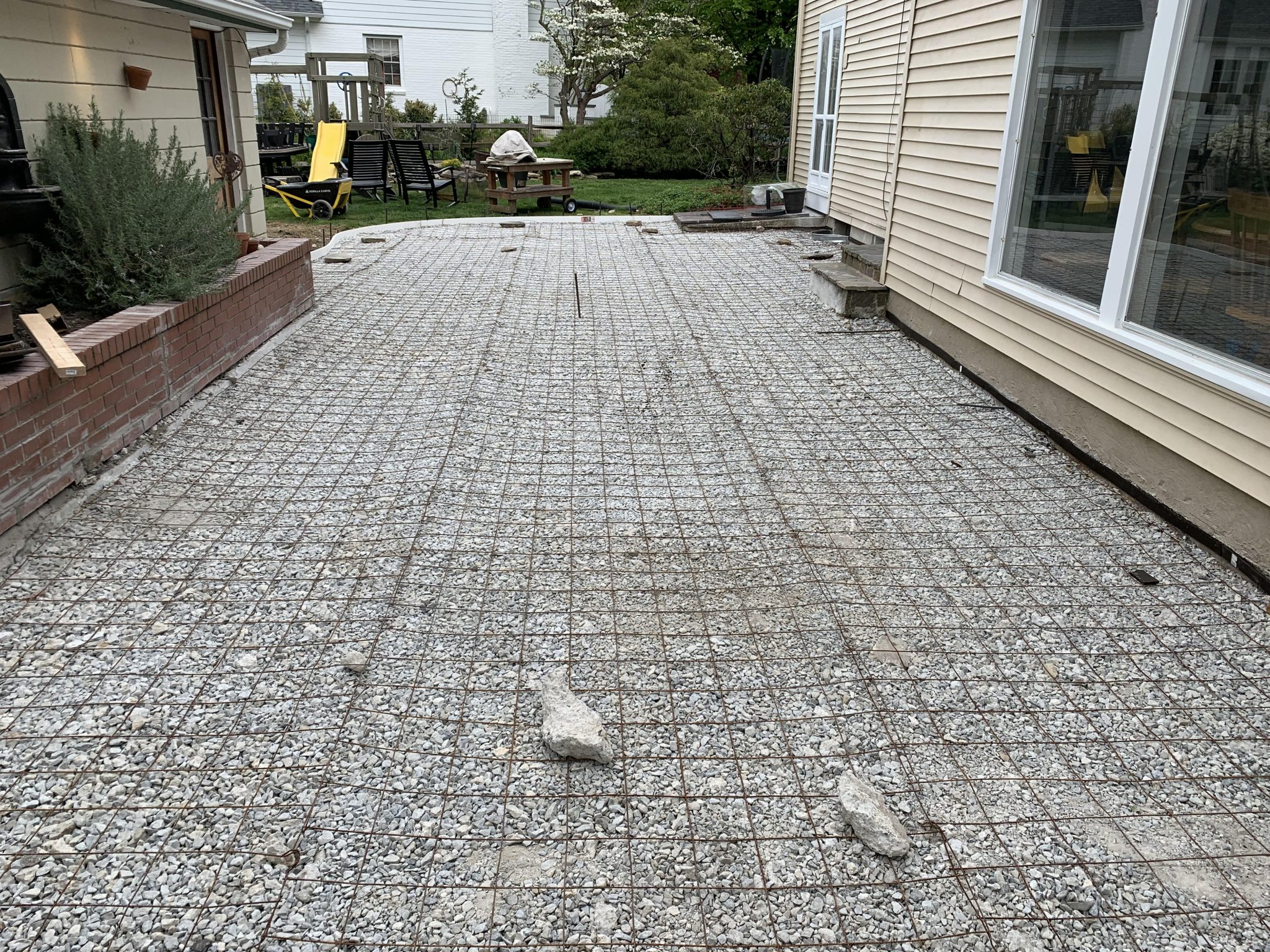
A lot of our Pennsburg-area work starts as exactly that kind of project: a homeowner who has spent years regrading a rutted gravel driveway every spring and is done doing it. Converting a long rural lane to concrete is a different job than a typical suburban driveway pour. The runs are often 150 to 400 feet, sometimes longer, and the base preparation has to account for the whole length holding up under a season of frost heave and runoff, not just the last thirty feet near the garage.
We excavate to grade, compact a crushed stone base sized to the length and expected load, and pour a reinforced slab thick enough for daily vehicle traffic—typically deeper and reinforced with wire mesh or rebar compared to a walkway. On longer runs we also plan control joint spacing and any transition points where the drive crosses a slope, so the finished surface sheds water instead of holding it.
The payoff for homeowners who make this switch is usually immediate: no more spring grading, no more washboarding after a hard rain, and a driveway that actually looks finished next to the house instead of like an access road.
Siting New Concrete Around Septic Systems and Private Wells
Most homes outside the Pennsburg borough core—and a fair number inside it—run on an on-lot septic system and a private well rather than public sewer and water. That is a real constraint on where a new driveway, patio or walkway can go, and it is one we raise at the estimate visit rather than after the crew shows up with a mini-excavator.
Concrete and heavy equipment do not belong on top of a septic tank, distribution box or drain field. Compacting soil over a drain field can reduce its ability to absorb effluent, and pouring a slab over one makes future pumping, inspection or repair far more difficult and, in some cases, is restricted by the county health department. Before we finalize a layout, we ask whether you have an as-built drawing or a recent Montgomery County Health Department septic record showing tank and drain field locations, and where a well and its required setback sit relative to the proposed work.
When a driveway alignment would otherwise cross near a septic component, we look at options: shifting the path, narrowing the section over sensitive ground, or in some cases recommending a different surface for that segment instead of a full structural slab. We would rather have that conversation up front than pour something that causes a septic problem eighteen months later.
If you do not have septic records on hand, that is common for older Upper Perkiomen properties, and we can usually work from tank riser locations, inspection ports, and the drain field's general orientation on the lot to keep new concrete clear of it.
Drainage and Grading for Long Rural Driveway Runs
Water management matters more on a 300-foot rural lane than it does on a 40-foot suburban driveway, simply because there is more slope, more watershed and more chance for a low spot to collect runoff and freeze. We grade every long-run driveway to carry water off the surface toward a ditch, swale or culvert rather than letting it pool against the slab edge, which is one of the more common causes of premature cracking and heaving on rural pours we get called out to fix from other contractors' work.
Where a driveway crosses a roadside ditch or connects to a township road, a culvert pipe sized for the drainage area is usually part of the scope, along with any driveway apron or approach work at the road. We coordinate that with the relevant township—Upper Hanover, Marlborough, or the borough itself—since driveway approaches onto public roads typically require a permit and have setback and drainage requirements we confirm before pouring rather than after.
For properties with any meaningful grade change along the driveway length, we also plan for control joints and, where needed, expansion joints at transition points so the concrete can move slightly with seasonal freeze-thaw without cracking randomly across the slab.
None of this is exotic work, but it is the difference between a driveway that looks good for one winter and one that still looks good after ten.
Driveways, Walkways, Patios and Stamped Concrete for Upper Perkiomen Homes
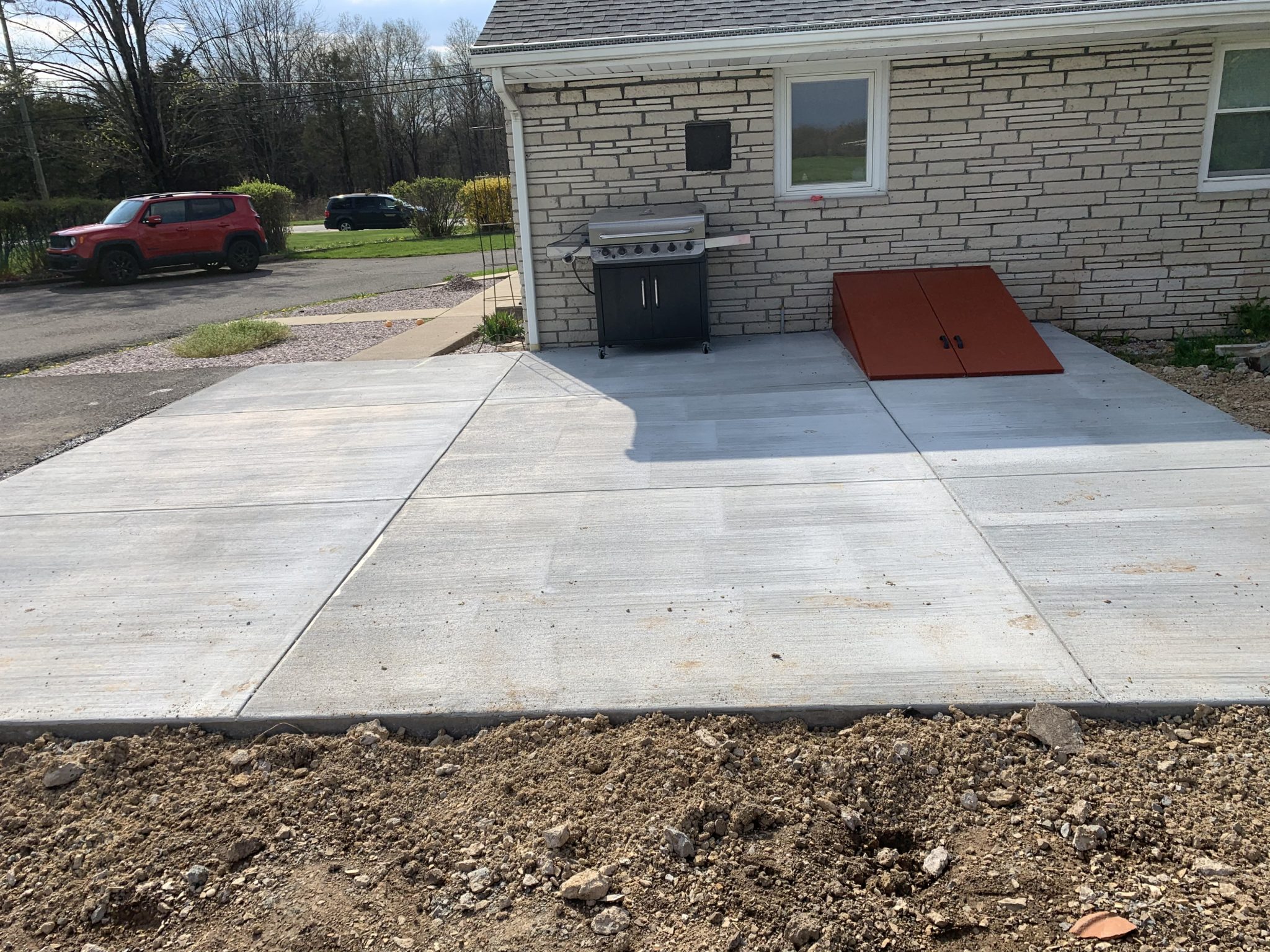
Pricing varies by what the concrete has to do. A walkway or a patio carries foot traffic only, so we typically pour a 4-inch slab over a compacted crushed stone base. A driveway carries vehicle loads—including the occasional delivery truck, farm equipment or trailer on rural properties—so we go thicker, usually 5 to 6 inches, reinforced with wire mesh or rebar, over a deeper compacted base. That difference in thickness, reinforcement and base depth is the main reason driveways cost more per square foot than a walkway of the same size.
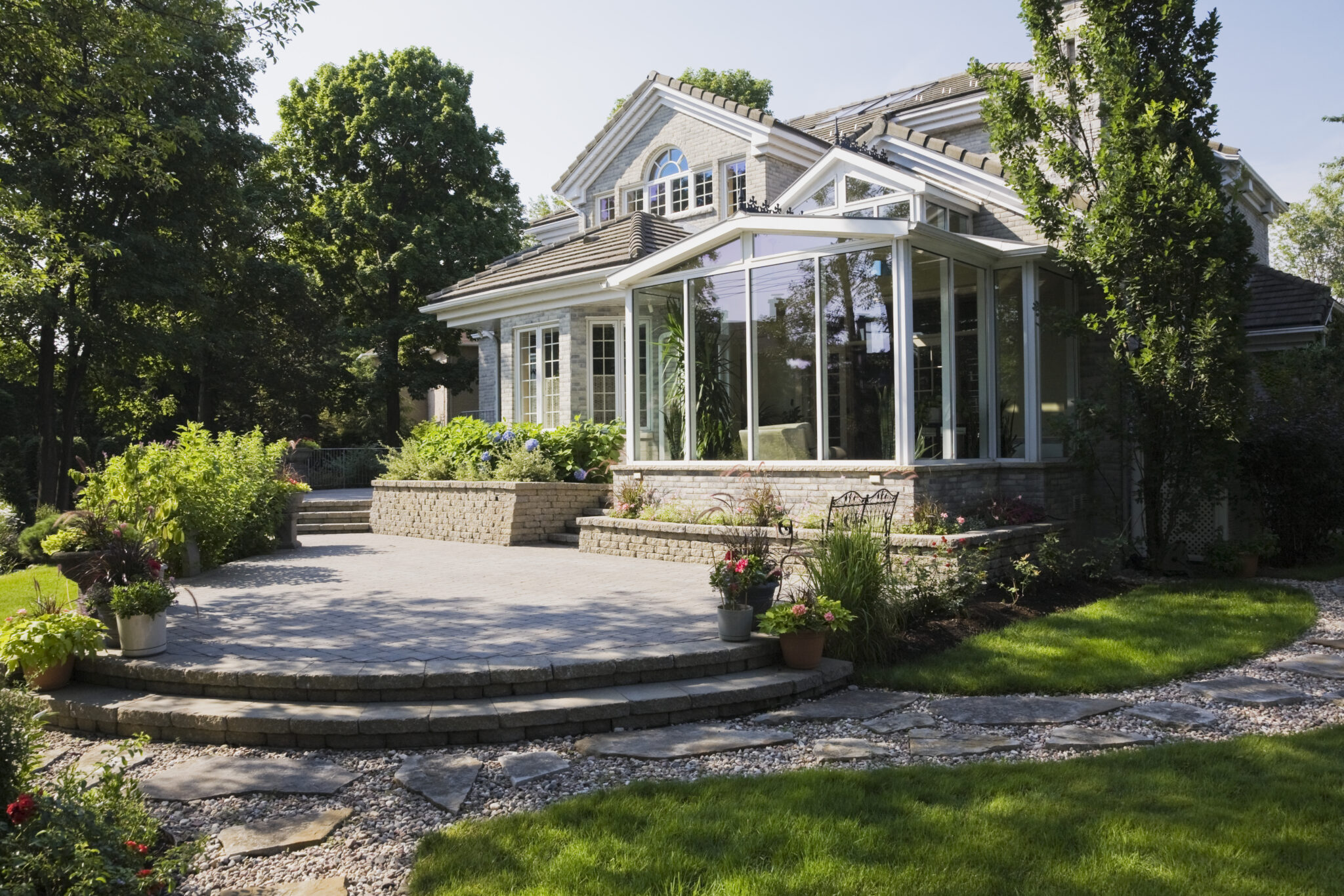
For patios, many Pennsburg-area homeowners with larger rural lots ask about stamped concrete, which uses an integral color and a stamped pattern—flagstone, cobblestone or brick-look are common choices—finished with a release agent and sealer. It costs more than a plain broom-finish slab but gives you a stone or pavers look without the long-term joint maintenance.
All of our exterior concrete mixes are air-entrained, which matters in this part of Pennsylvania where freeze-thaw cycling is a real annual stress on any outdoor slab. We also space control joints to manage where cracking happens, since all concrete develops some hairline cracking over time—the goal is controlling where it occurs, not pretending it never will.
A Concrete Contractor Pennsburg and Upper Perkiomen Homeowners Can Count On
Rural work has its own logistics: longer driveways mean more material, more equipment time and a bigger footprint for staging, and we plan for that up front rather than discovering mid-project that we underestimated a 300-foot pour. We also know this part of Montgomery County well enough to talk through township permitting for driveway approaches without you having to chase that information down yourself.
Our team has more than twenty years of experience across southeastern Pennsylvania, and concrete work sits alongside our home addition and decking divisions, so if a driveway or patio project turns into a bigger exterior plan, the same company can carry it through.
We are BBB accredited, OSHA certified, licensed and insured, and we are a GAF Master Select and CertainTeed Master Craftsman company, credentials that mostly speak to our roofing and siding work but reflect the same standards we hold ourselves to on a concrete crew.
Every estimate is itemized—excavation, base material, reinforcement, concrete and finish work broken out separately—so you can see exactly what you are paying for. Browse our project gallery and customer reviews, or contact us to get a rural driveway or patio project scheduled.
FAQs – Residential Concrete in Pennsburg, PA
Common questions from Pennsburg homeowners about driveways, walkways, patios and stamped concrete.
Can you convert a long gravel driveway to concrete?
Yes, this is one of our more common Upper Perkiomen Valley projects. We grade the full run, compact a crushed stone base sized to the length, and pour a reinforced slab thick enough for daily vehicle loads. Drainage planning matters more on long rural runs than on a short suburban driveway, so we grade to carry water off the surface rather than letting it pool.
Will you check for septic and well locations before pouring?
Yes, and we ask about it at the estimate visit. Concrete and heavy equipment need to stay clear of septic tanks, distribution boxes and drain fields, and away from well setbacks. If you have an as-built or county health department septic record, that speeds things up; if not, we can usually work from visible tank risers and the drain field's general location.
How much more does a driveway cost than a walkway or patio?
Driveways cost more per square foot because they carry vehicle loads. That means a thicker slab, typically 5 to 6 inches versus 4 inches for a walkway or patio, plus wire mesh or rebar reinforcement and a deeper compacted base. A walkway or patio, carrying foot traffic only, needs less material and less reinforcement.
What is stamped concrete and is it worth it for a patio?
Stamped concrete uses an integral color and a stamped pattern such as flagstone, cobblestone or brick-look, finished with a release agent and sealer. It costs more than plain broom-finish concrete but gives a stone or pavers appearance without individual joints to maintain. It is a popular upgrade for patios on larger Upper Perkiomen lots.
How does cold weather affect pouring in this area?
We generally pour outdoors from April through November in southeastern Pennsylvania. Concrete needs to cure above freezing to gain strength properly, so shoulder-season pours may use insulating blankets or accelerators, and we avoid pouring when a hard freeze is expected within the first 24 to 48 hours. We will tell you plainly if a requested date is not workable.
How long before I can drive on a new driveway or walk on a new patio?
New concrete is typically ready for foot traffic in 24 to 48 hours and for vehicle traffic after about 7 days, though it continues gaining strength up to roughly 28 days. We also recommend avoiding deicing salt on new concrete through its first winter; use sand for traction instead.
How do I get a Pennsburg concrete project started?
Send us the address, a description of what you need (driveway conversion, walkway, patio) and any known septic or well locations. We will schedule a site visit, walk the property with you, and follow up with a written, itemized estimate. Call 484-353-3046 or contact us online.
Talk to a Pennsburg Concrete Contractor
Whether it is a gravel-to-concrete driveway conversion, a new walkway or a stamped patio, tell us the site and what you need and we will tell you what is achievable and what it costs. Serving Pennsburg, East Greenville, Red Hill and the surrounding Upper Perkiomen Valley.
Schedule Your Estimate Call 484-353-3046